

The Definitive Engineering Guide to
The performance of an electric golf trolley relies entirely on the quality and configuration of its power source. On a 36-hole course with rolling hills, rough terrain, and varying dampness, the battery dictates whether your equipment finishes the day efficiently or fails prematurely on the back nine. Over the last several years, battery technology has diversified significantly. Understanding the distinct engineering properties of the types of golf trolley batteries is essential for maintaining smooth equipment operations, avoiding premature degradation, and making informed procurement choices.
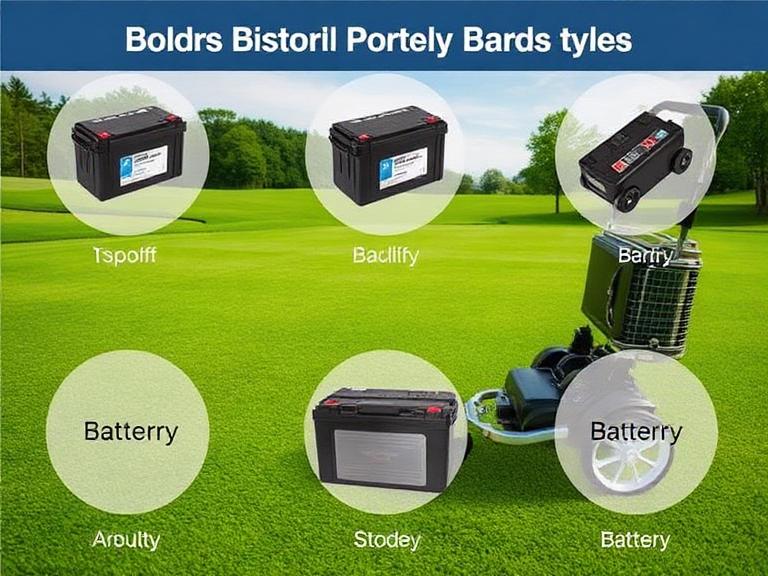
En OHRIJA, a high-tech brand owned by Dongguan Hengruihong Technology Co., Ltd., we develop, manufacture, and distribute elite power adapters, switching power supplies, and specialized industrial charging platforms. From our experience, many fleet managers and retail consumers misjudge how these power configurations interact with their equipment. They often select premium batteries only to ruin them with substandard or mismatched chargers. This document provides an exhaustive breakdown of the modern types of golf trolley batteries, analyzes their unique charging metrics, and outlines strategies to optimize their lifespan.
Índice
- 1. Comparison Matrix: Golf Trolley Battery Technologies
- 2. Deep-Dive: Sealed Lead-Acid and AGM Solutions
- 3. Deep-Dive: Lithium-Ion Battery Architectures
- 4. Deep-Dive: Lithium Iron Phosphate (LiFePO4) Systems
- 5. Critical Charging Profiles and Cross-Compatibility Mechanics
- 6. Preguntas más frecuentes (FAQ)
- 7. Academic and Technical References
1. Comparison Matrix: Golf Trolley Battery Technologies
To evaluate various options effectively, one must look past marketing promises and examine concrete technical metrics. The table below outlines the core properties across the three dominant types of golf trolley batteries used in the global marketplace.
| Technical Parameter | Sealed Lead-Acid (SLA/AGM) | Standard Lithium-Ion | Fosfato de litio y hierro (LiFePO4) |
|---|---|---|---|
| Average Lifespan (Cycles) | 200 to 400 cycles | 800 to 1,200 cycles | 2,000 to 3,500+ cycles |
| Recommended Depth of Discharge | 50% maximum | 80% typical | 90% to 100% safe drainage |
| Weight Profile (Per 12V 24Ah) | Heavy (16 to 22 lbs) | Ultra-Light (5 to 7 lbs) | Lightweight (6 to 9 lbs) |
| Thermal Stability Rating | Moderate | Fair (Requires robust BMS) | Excellent (Extremely safe) |
| Relative Cost (Upfront) | Low initial investment | Moderate to high investment | High premium investment |
| Long-Term Operational Value | Poor due to frequent replacement | Strong over multi-year use | Exceptional total cost reduction |
2. Deep-Dive: Sealed Lead-Acid and AGM Solutions
Sealed Lead-Acid (SLA) and Absorbed Glass Mat (AGM) systems represent the traditional standard for automated golf equipment. They rely on an older chemical matrix featuring lead plates immersed in an acidic electrolyte bath. While their manufacturing infrastructure makes them inexpensive upfront, they feature significant engineering trade-offs.
From our experience, the single biggest limitation of SLA systems is their extreme vulnerability to deep discharge cycles. If you drain an AGM variant past 50% of its rated capacity during a round of golf, you initiate rapid plate sulfation. This chemical crystallization permanently robs the cells of capacity, leading to a quick decline in operational range. Furthermore, their heavy weight increases the physical load on the golf trolley motor, leading to faster wear on axles, bearings, and drive gears.
Additionally, lead-acid options exhibit Peukert coefficient drops. This means that under high motor strain, such as traversing steep hills or thick mud, the usable amp-hour capacity decreases faster than standard calculations predict. Consequently, an aging SLA cell may function acceptably on flat fairways but die unexpectedly on a demanding back nine.
3. Deep-Dive: Lithium-Ion Battery Architectures
Standard Lithium-Ion options, typically utilizing Manganese, Cobalt, or Nickel formulations, transformed the walking caddie and trolley marketplace. By migrating away from heavy lead construction, manufacturers reduced the weight of the onboard power supply by over 65%.
This massive weight reduction yields excellent performance advantages. A lighter cart glides over wet fairways without compacting the turf or sinking into soft traps, using far less current from the motor. Standard lithium-ion chemistries support an impressive depth of discharge, allowing golfers to utilize up to 80% of the stored energy without damaging the internal cells.
From Our Experience: The Battery Management System (BMS) Matrix
We recommend verifying that any lithium-ion option you source features a high-grade Battery Management System. Because standard lithium configurations exhibit narrow thermal run-away profiles, a premium internal BMS circuit is mandatory to actively protect against over-current, over-voltage, cell imbalance, and extreme operating temperatures.
To safely charge these dense energy storage units, specialized high-output power systems are required. Commercial fleets and serious golfers looking for robust 48V setups should review detailed performance breakdowns like those found in our guide on the best lithium ion battery charger 48V platforms. Using the correct charger preserves safety and ensures proper cell balancing during every charge cycle.
4. Deep-Dive: Lithium Iron Phosphate (LiFePO4) Systems
Among all the types of golf trolley batteries available on the modern market, Lithium Iron Phosphate represents the premium tier for safety, lifespan, and thermal endurance. The structural stability of the olivine crystal structure in LiFePO4 cells prevents oxygen release during heavy stress, eliminating the risk of thermal runaway found in other lithium-ion variations.
While a LiFePO4 variant demands a higher initial capital outlay, its long-term cost per cycle is unmatched. A typical SLA unit might manage 300 cycles before failing, whereas a premium LiFePO4 cell will routinely pass 2,500 to 3,000 deep discharge cycles while retaining over 80% of its factory capacity. This longevity spans nearly a decade of regular use on the course, completely erasing the apparent upfront savings of lead-acid options.
To preserve this chemical matrix over thousands of rounds, matching the cell with an engineered charging system is essential. Fleet managers trying to maximize their infrastructure investments should consult our exhaustive evaluation of the best LiFePO4 battery chargers 2025 to discover charging systems configured for these highly efficient chemical profiles.
5. Critical Charging Profiles and Cross-Compatibility Mechanics
The lifetime value of any golf battery is directly determined by the charger coupled to it. A poor charger can destroy a premium power cell within months by applying incorrect voltage limits, over-heating the cells, or using incorrect multi-stage algorithms.
Can You Mix Chargers and Chemical Matrix Profiles?
A common mistake we see involves operators attempting to use existing chargers on upgraded batteries. This is a critical error. For example, a lead-acid charger relies on float and equalization voltage modes designed to desulfate lead plates. If you apply those algorithms to a lithium pack, you risk damaging the electronic control boards and triggering cell degradation. For an in-depth technical analysis of these constraints, read our engineering brief on whether a ¿Puede un cargador de litio cargar una batería LiFePO4? to understand the precise voltage curve differences that dictate safe operation.
Voltage Step-Down and Step-Up Fallacies
Another dangerous practice in equipment maintenance is attempting to cross-wire systems with mismatched voltages. A common question among operators trying to handle field emergencies is whether a lower-voltage charger can feed a higher-voltage system. We address this directly in our technical guide clarifying ¿puedo cargar una batería de 36V con un cargador de 12V? units. Attempting this without intermediate buck-boost conversion hardware will fail to initiate charging and can overload the charging circuitry.
Whether you are managing single trolleys or maintaining broader resort transport systems, sourcing dedicated high-efficiency charging systems is essential. For large ride-on cart setups, utilizing systems from our evaluated best golf cart battery chargers 48V catalog guarantees optimal performance. For personal mobility options on or off the fairway, consulting the best portable scooter battery chargers guide ensures your light utility electric vehicles stay ready for daily use.
6. Preguntas más frecuentes (FAQ)
Can I use a standard lead-acid charger on a lithium golf trolley battery?
No. Lead-acid chargers use specific charging stages, like desulfation stages with high voltage spikes, that can permanently damage the sensitive electronics of a lithium battery or its internal BMS. You must use a charger specifically calibrated for lithium chemistry.
What makes LiFePO4 safer than standard Lithium-Ion batteries?
LiFePO4 utilize an incredibly stable chemical structure that exhibits superior thermal and chemical resistance. This prevents the cell from releasing oxygen under high stress or elevated operating temperatures, effectively eliminating the risk of fire or thermal runaway.
How far should I drain my golf trolley battery during a round?
For traditional sealed lead-acid options, we highly recommend keeping the discharge above 50% to protect the plates. For lithium and LiFePO4 options, you can safely utilize 80% to 90% of the total rated capacity without causing structural degradation to the cell matrix.
How does cold weather affect the types of golf trolley batteries?
All battery types lose temporary capacity when operated in freezing conditions. However, lithium options can be discharged normally in cold weather, though they should never be charged below freezing temperatures (32 degrees Fahrenheit or 0 degrees Celsius) without a pre-heating mechanism, as this can cause lithium plating.
Why does my golf trolley lose power when climbing hills with an old battery?
As batteries age, their internal resistance increases. When the motor demands high current to climb steep hills, this internal resistance causes a severe voltage drop, causing the trolley control system to cut power prematurely to protect the components.
7. Academic and Technical References
For more granular scientific data regarding electrochemical storage systems and charging safety, consult the following authoritative industry entities:
- IEEE Xplore Digital Library. Analysis of Battery Management Systems and Aging Mechanisms in Lithium-Based Systems. Institute of Electrical and Electronics Engineers.
- U.S. Department of Energy (DOE). Alternative Fuels Data Center – Electrochemical Battery Chemistry Matrix Overview. National Renewable Energy Laboratory.
- International Electrotechnical Commission (IEC). IEC 62133 Safety Requirements for Secondary Cells and Batteries Containing Non-Acid Electrolytes. Geneva, Switzerland.
 English
  Français
  Deutsch
  Italiano
  Nederlands
  Español
  Português do Brasil
  Türkçe
  Русский