

En OHRIJA, a brand belonging to Dongguan Hengruihong Technology Co., Ltd. established in 2020 and headquartered in Dongguan, Guangdong Province, China, we operate as a high-tech enterprise integrating research and development, production, and sales. Our main product line includes the lithium battery charger, lithium iron phosphate battery charger, lead-acid battery charger, golf cart charger, power adapter, and switching power supply units. Based on our extensive engineering background, finding reliable Solutions for Switching Power Supplies is critical to maintaining operational efficiency across all industrial and consumer electronics.
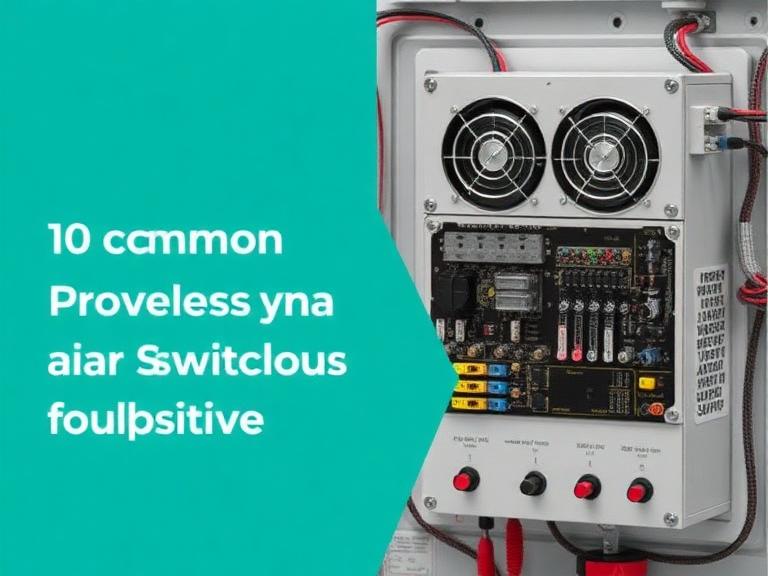
Switching mode power supplies are the lifeblood of modern technology, prized for their high efficiency and compact form factor. However, their complex internal circuitry makes them susceptible to specific operational faults. From our experience, most field failures can be traced back to thermal stress, component aging, or electrical surges. In this comprehensive guide, we will break down the ten most frequent issues engineers face, providing actionable, professional Solutions for Switching Power Supplies to extend the lifespan of your critical equipment.
Índice
- 1. Startup Failures and Blown Fuses
- 2. Unstable Output Voltage
- 3. Overheating and Thermal Stress
- 4. High Output Ripple and Noise
- 5. Electromagnetic Interference Issues
- 6. Inadequate Power Output and Overload Protection
- 7. Intermittent Operation and Random Restarts
- 8. High-Frequency Audible Noise
- 9. Poor Load Capacity Due to Component Aging
- 10. Input Voltage Fluctuations and Mains Instability
- 11. Summary Table of Common Issues
- 12. Frequently Asked Questions
- 13. Industry References
1. Startup Failures and Blown Fuses
One of the most immediate indicators of a severe fault is a complete lack of output, often accompanied by a blown input fuse. When a unit fails to start, it is typically due to a massive short circuit on the primary side. From our experience, blown fuses are rarely an isolated event. They act as a protective measure against catastrophic component failure, such as shorted bridge rectifiers, damaged power MOSFETs, or failing electrolytic capacitors.
Implementing proper Solutions for Switching Power Supplies facing startup failures begins with a thorough visual inspection and multimeter continuity checks. We recommend replacing the fuse only after verifying that the primary switching transistors and diodes are free of shorts. For those requiring robust replacements, upgrading to a high-capacity unit like the Fuente de alimentación 12V 50A 600W can provide much better surge tolerance and reliability.
2. Unstable Output Voltage
Voltage instability can wreak havoc on sensitive downstream electronics. This problem manifests as a fluctuating direct current output that fails to remain within the specified tolerance range. The root cause often lies within the feedback loop, specifically involving the optocoupler, voltage reference integrated circuits, or the output filter capacitors. If the control chip cannot accurately sample the output voltage, it will erratically adjust the switching duty cycle.
Effective Solutions for Switching Power Supplies with unstable outputs involve testing the feedback circuit components meticulously. We recommend measuring the equivalent series resistance of the output capacitors, as dried-up electrolytic capacitors frequently cause regulation issues. Working with a reliable fabricante de fuentes de alimentación regulables ensures better component quality and more stable voltage regulation from the start.
3. Overheating and Thermal Stress
Excessive heat is the primary enemy of any electronic component. Overheating can lead to the premature failure of semiconductors and the rapid degradation of internal capacitors. Thermal stress usually stems from poor ventilation, prolonged operation at peak load, or the accumulation of dust on internal heat sinks. In enclosed environments, the lack of forced air cooling severely diminishes thermal dissipation capabilities.
Our recommended Solutions for Switching Power Supplies suffering from thermal stress include implementing active cooling management. Ensure that cooling fans are operational and heat sinks are unobstructed. If the application environment is naturally hot, over-specifying the power rating allows the unit to operate well within its thermal derating curve, significantly improving its lifespan.
4. High Output Ripple and Noise
For precision analog circuits and communication equipment, a clean direct current output is mandatory. High ripple and noise occur when the switching frequency bleeds through to the output or when high-frequency transients are not properly filtered. This is almost exclusively a failure of the output filtering stage. Over time, filter capacitors lose their capacitance and increase their internal resistance, allowing alternating current ripple to ride on the output.
To implement permanent Solutions for Switching Power Supplies with high noise, you must replace aging electrolytic capacitors with high-quality, low equivalent series resistance equivalents. In some cases, adding external filters or ferrite beads to the output cables can suppress high-frequency switching transients effectively.
5. Electromagnetic Interference Issues
These devices generate high-frequency switching pulses that can radiate electromagnetic interference, disrupting nearby sensitive equipment or failing regulatory compliance testing. Interference issues generally arise from compromised shielding, poor printed circuit board layout, or the failure of input filter components such as common-mode chokes.
Professional Solutions for Switching Power Supplies dealing with electromagnetic interference involve inspecting and reinforcing the grounding connections. We recommend ensuring that the metallic enclosure is properly grounded and that the input filter circuit is fully intact. Using high-quality shielded cables for the output can also mitigate radiated noise.
6. Inadequate Power Output and Overload Protection
When a unit shuts down immediately upon connecting a load, it is likely triggering its internal overload or short-circuit protection circuits. This happens when the connected equipment draws more current than the rating allows, or when an internal fault falsely signals an overcurrent condition. A degraded current sense resistor can cause a premature shutdown.
The simplest Solutions for Switching Power Supplies experiencing overload trips is to verify the load requirements. Disconnect non-essential components to see if the unit powers on. If you are powering high-drain devices like large battery banks or electric vehicles, upgrading to a dedicated Cargador de scooter eléctrico de 84 V or a heavy-duty Cargador de baterías de litio de 24 V 10 A ensures the supply matches the demand without tripping protections.
7. Intermittent Operation and Random Restarts
Intermittent faults are notoriously difficult to diagnose. The equipment may work perfectly for hours and then suddenly turn off and restart without warning. These issues are typically caused by thermal expansion affecting cold solder joints, cracked circuit board traces, or loose physical connections. As the unit heats up, the connection breaks, and as it cools, the connection is restored.
To find accurate Solutions for Switching Power Supplies with intermittent behavior, we recommend a meticulous visual inspection under magnification. Reflowing suspicious solder joints, particularly around heavy components like transformers and power resistors, often resolves the issue permanently.
8. High-Frequency Audible Noise
A well-designed unit should operate silently. If your equipment begins emitting a high-pitched whine, hissing, or clicking sound, it is a clear indicator of component stress. Audible noise is usually caused by the physical vibration of transformer cores or inductor coils operating at unstable frequencies. It can also be a symptom of a failing input capacitor causing the switching frequency to drop into the human hearing range.
Effective Solutions for Switching Power Supplies emitting audible noise include securing loose transformer cores with insulating varnish or replacing degraded input filter capacitors. If the noise persists under light loads, it may be a design characteristic of the burst-mode operation, which can be mitigated by maintaining a minimum load threshold.
9. Poor Load Capacity Due to Component Aging
An aging unit may show the correct voltage when measured with no load, but the voltage drops drastically the moment a load is applied. This poor load capacity is a classic symptom of aging components, particularly the main high-voltage reservoir capacitor on the primary side or deteriorating switching transistors losing their efficiency.
Proactive Solutions for Switching Power Supplies experiencing poor load capacity involve a full diagnostic of the primary side capacitance and the switching transistors. We recommend periodic maintenance and component replacement for mission-critical infrastructure before it reaches its end-of-life cycle.
10. Input Voltage Fluctuations and Mains Instability
These devices are designed to operate within a specific input voltage range. If the utility grid experiences severe voltage sags, spikes, or frequency variations, the regulation circuit may fail. While universal input designs can handle a wide range, extreme surges can destroy the varistors and input rectifiers, leaving the unit dead.
The most robust Solutions for Switching Power Supplies exposed to poor power quality is the installation of external line conditioners or surge protectors. For industrial applications, selecting a robust Fuente de alimentación de CA a CC 24 V 15 A designed with wide input tolerances provides an excellent buffer against utility instability.
11. Summary Table of Common Issues
| Common Problem | Primary Cause | Recommended Repair Action |
|---|---|---|
| Startup Failures | Blown fuse, shorted primary components | Check MOSFETs and rectifiers before replacing fuses |
| Unstable Voltage | Feedback loop failure, degraded capacitors | Inspect optocouplers and replace output capacitors |
| Sobrecalentamiento | Poor ventilation, prolonged peak load | Improve airflow, clean heat sinks, upgrade capacity |
| High Ripple and Noise | Failing output filter capacitors | Install low equivalent series resistance capacitors |
| Intermittent Restarts | Cold solder joints, thermal expansion | Reflow solder joints on heavy components |
| Audible Noise | Vibrating transformer cores, aging capacitors | Varnish transformer coils, replace input capacitors |
12. Frequently Asked Questions
What are the most common Solutions for Switching Power Supplies that will not turn on?
From our experience, the first step is to check the input voltage and the internal fuse. If the fuse is blown, do not simply replace it. You must test the primary bridge rectifier and switching transistors for short circuits to prevent the new fuse from blowing immediately.
How can I prevent overheating in my equipment?
We recommend ensuring adequate space around the unit for natural convection cooling. If the unit has a built-in fan, ensure it is free of dust and spinning smoothly. Operating the unit at only eighty percent of its maximum rated load is one of the best preventative Solutions for Switching Power Supplies to extend their lifespan.
Why does the output voltage drop when a load is applied?
This indicates poor load capacity, often caused by a failing primary reservoir capacitor or a degraded switching transistor. Replacing these aging components will restore the unit’s ability to deliver its rated current without voltage droop.
13. Industry References
To maintain the highest standards of safety and engineering, we base our troubleshooting methodologies on established electrical engineering principles.
- Institute of Electrical and Electronics Engineers. Guide for the Diagnosis of Power Electronics Failures.
- International Electrotechnical Commission. Standards for Electromagnetic Compatibility in Power Supply Units.
- Power Sources Manufacturers Association. Best Practices for Thermal Management in High-Density Power Converters.
At OHRIJA, we are dedicated to providing the most reliable and efficient energy solutions on the market. By understanding these common faults and applying the correct Solutions for Switching Power Supplies, you can ensure the longevity and safety of your electronic systems.
 English
  Français
  Deutsch
  Italiano
  Nederlands
  Español
  Português do Brasil
  Türkçe
  Русский