

Fleet operators, golf cart technicians, and emergency maintenance personnel frequently encounter a frustrating failure mode: a high-voltage battery pack that has dropped below its structural activation threshold. When a 48V pack comprised of six 8V deep-cycle batteries drains completely due to an unaddressed electrical load or prolonged seasonal storage, the automatic smart charger will fail to turn on. These units require a baseline feedback voltage—often around 30 to 36 volts—before initiating current flow. When the automatic system refuses to trigger, technicians often turn to manual recovery methods, trying to charge 8 volt battery with 12 volt charger components to rescue the individual cells.

Unter OHRIJA, a high-tech brand owned by Dongguan Hengruihong Technology Co., Ltd., we specialize in developing, manufacturing, and distributing high-performance charging systems, switching power supplies, and advanced power adapters. From our experience, attempting to bridge unmatched voltages presents significant technical risks. Applying a standard 12V automotive curve to a single 8V cell will quickly overcharge the chemical plates, causing massive gassing, boiling of the electrolyte, and catastrophic structural degradation if left unmonitored. This guide outlines a structured, 5-step recovery procedure designed specifically to revive low cells safely, bringing your battery pack back to a level where your standard system can resume operation.
Inhaltsverzeichnis
- 1. Operational Parameters: Voltage Threshold Dynamics
- 2. Electrochemistry: The Danger of Mismatched Thermal Saturation
- 3. Step-by-Step Recovery Protocol
- 4. Structural Upgrades: Aligning Power Supplies with Battery Chemistry
- 5. Häufig gestellte Fragen (FAQs)
- 6. Academic and Industrial Technology References
1. Operational Parameters: Voltage Threshold Dynamics
Before connecting alternative electrical equipment, you must establish an analytical baseline of your battery’s current state. The table below details how individual 8V cell voltages map to your broader 48V fleet parameters during deep discharge cycles.
| Individual 8V Cell Voltage | Calculated 48V Pack Voltage | Ladezustand (State of Charge, SoC) | Automated Charger Behavior | Required Recovery Action |
|---|---|---|---|---|
| 8.44V to 8.49V | 50.6V to 50.9V | 100% Fully Charged | Standard automatic cycling | None; normal operation operational |
| 7.90V to 8.05V | 47.4V to 48.3V | 50% State of Charge | Standard automatic cycling | Standard plug-in rejuvenation |
| 7.00V to 7.20V | 42.0V to 43.2V | 0% State of Charge | Borderline activation state | Monitor closely; standard hookup may lag |
| Below 5.00V | Below 30.0V | Deeply Depleted / “Dead” | Refuses to activate (Fault light triggers) | Manual step-recovery required to boot voltage |
2. Electrochemistry: The Danger of Mismatched Thermal Saturation
To implement an alternative setup safely, you must first understand the electrochemistry of lead-acid systems. A standard 8V battery consists of four individual 2-volt cells wired internally in series. When fully charged, its resting potential sits at roughly 8.49V. To push energy back into the chemical plates during standard maintenance, an 8V charger delivers a targeted maximum absorption voltage of about 9.2V to 9.4V.
When you attempt to charge 8 volt battery with 12 volt charger systems, the mismatch is severe. A 12V automotive charger is built to push between 14.4V and 14.8V during its bulk charging stage. If you connect this high voltage to an 8V battery without safety limits, you subject the four internal cells to nearly 3.7V each. This massive electrical stress causes the water within the electrolyte to split into hydrogen and oxygen gases rapidly, leading to bubbling, plate sulfation, and potential thermal runaway. Therefore, using a 12V charger should only be treated as a brief, supervised shock method to boost base voltage, never as a complete or automated charging solution.
CRITICAL INSIGHT: The Topping-Off Fluid Hazard
We recommend strictly verifying your internal fluid levels before initiating a manual recovery process. Deeply depleted batteries will experience fluid expansion and heating during high-voltage jumps. If you top off the cells with distilled water to the maximum line while the battery is dead, the manual recovery current will cause the electrolyte to boil over, dumping corrosive sulfuric acid onto your floor and staining your workspace frames.
3. Step-by-Step Recovery Protocol
This procedure is designed exclusively for flooded lead-acid or deep-cycle AGM batteries that have dropped too low to trigger automatic charging systems. It must be performed in a highly ventilated area with constant manual supervision.
Step 1: Isolate the Low Cells and Inspect Physical Integrity
Park the vehicle on a level surface, turn off all accessories, and open the seat panel or access hatch to expose the internal pack. Put on heavy safety glasses and protective rubber gloves. Use a digital voltmeter to test each individual battery, recording the numbers systematically. Identify the specific low cells that are pulling the entire pack below the activation threshold. Inspect the plastic outer casings carefully; if you spot bulging sides, hairline cracks, or leaking acid, the battery has suffered structural failure and must be replaced immediately.
Step 2: Balance Internal Electrolyte Levels
Carefully remove the plastic vent caps from each cell compartment. Inspect the internal lead plate grids down inside the fluid paths. If the liquid has evaporated to expose the top edges of the lead grids, add just enough distilled water to submerge the plates safely. Do not fill the cells up to the full collar line at this stage, as you must leave adequate space to handle fluid expansion and bubbling during the manual charge cycle.
Step 3: Establish Precise Parallel Charger Connections
Configure your 12V manual charger to its lowest possible current setting—ideally a low 2-Amp trickle or 5-Amp bypass mode. Never use a high-powered 50-Amp engine jump start setting, as the rapid surge will warp the internal lead elements instantly. Attach the positive red clamp of the unpowered 12V charger to the positive terminal of the target 8V battery, then attach the negative black clamp to the corresponding negative terminal. Verify the polarity layout is correct before proceeding.
Step 4: Execute a Supervised Time-Capped Voltage Jump
Plug the 12V charger into a standard wall outlet to initiate current flow. Set a countdown timer for exactly 20 to 30 minutes. Do not leave the workstation area unattended while the high-voltage current is running. Touch the side walls of the plastic battery casing every five minutes to check for heat buildup. If the casing feels hot to the touch or if you hear loud, violent boiling noises from the open cell ports, unplug the charger immediately to let the system cool down.
Step 5: Verify Threshold Target and Transition Back to Main Charger
Once your timer expires, unplug the 12V charger from the wall outlet before detaching the terminal clamps. Let the battery rest for five minutes to allow the chemical activity to settle, then use your digital voltmeter to measure the resting potential across the terminals. Your goal is to lift the battery’s base voltage to roughly 7.0V to 7.2V. Once all the low cells across your pack reach this baseline, reconnect the main wiring harnesses and plug in your standard automated pack charger. The system should now recognize the combined voltage and activate normally to complete the full charge cycle.
4. Structural Upgrades: Aligning Power Supplies with Battery Chemistry
-
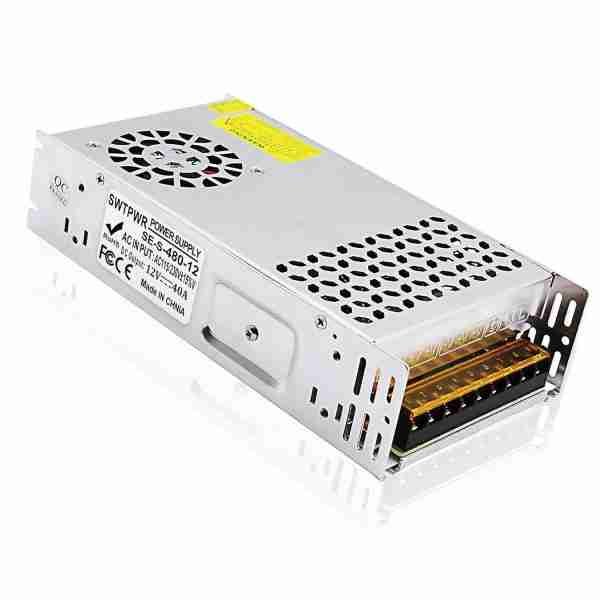
12-V-Stromversorgung 12 V, 40 A, 480 W, 50 A, 600 W Wechselstrom-Gleichstrom-Wandler 110 V/120 V zu 12 V Transformator LED-Treiber Intelligenter Lüfter Entwickelt für LED-Streifen, CCTV- und Fahrzeuggeräte
Preisspanne: 13.90$ bis 14.90$ -

12-V-Stromversorgung 12 V, 50 A, 600 W Wechselstrom-Gleichstrom-Wandler 110 V/120 V bis 12 V Transformator LED-Treiber Intelligenter Lüfter Entwickelt für LED-Streifen, CCTV- und Fahrzeuggeräte (DC12V, 12 V, 50 A, 600 W)
Preisspanne: 23.90$ bis 29.90$ -
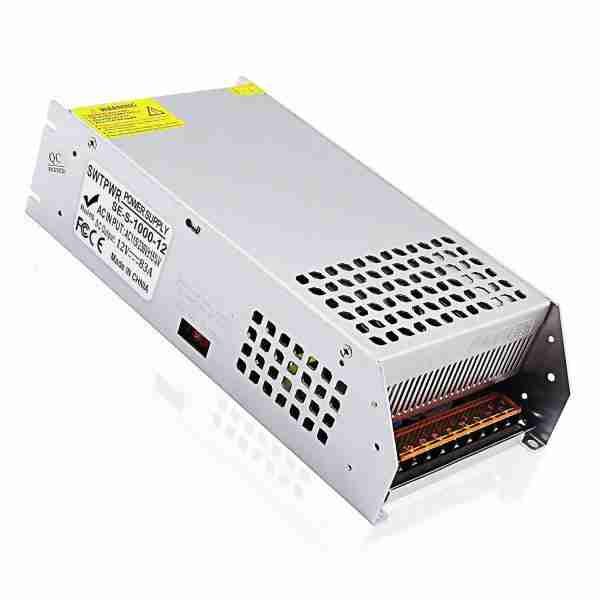
12-V-Stromversorgung 12 V 83 A 1000 W Wechselstrom-Gleichstrom-Wandler 110 V/120 V bis 12 V Transformator LED-Treiber Intelligenter Lüfter Entwickelt für LED-Streifen CCTV- und Fahrzeuggeräte
Preisspanne: 29.90$ bis 54.90$ -

24-V-Stromversorgung 24 V 15 A 360 W Wechselstrom-Gleichstrom-Wandler 110 V/120 V bis 24 V Transformator LED-Treiber Intelligenter Lüfter Entwickelt für LED-Streifen CCTV- und Fahrzeuggeräte (DC24V, 24 V-15 A-360 W)
Preisspanne: 23.90$ bis 29.90$
While using unmatched equipment can save you in a field emergency, relying on temporary workarounds can compromise battery lifespan over time. Moving your operations toward high-efficiency, dedicated charging hardware is the best way to safeguard your cells and maximize performance.
For large utility platforms, micro-mobility fleets, and commercial applications, matching the precise electrical curve required by your specific battery chemistry is non-negotiable. If your infrastructure utilizes high-capacity lithium configurations for industrial applications, deploying our ultra-stable 12V LiFePO4 Batterieladegerät 30A platform guarantees clean multi-stage current control without the risk of overcharging.
To explore matching options across different micro-mobility platforms, our specialized collection offers certified solutions for every weight class:
- Low-Voltage Light Systems: For custom light frameworks or light utility tools, using our balanced 24V-Lithium-Batterieladegerät 10A ensures your cells achieve optimal saturation smoothly.
- Standard eBike and Scooter Assets: For properties deploying electric transportation options, our high-demand 54.6V 5A eBike Akku-Ladegerät and the high-output 48V 10A eBike Ladegerät platforms feature real-time thermal monitoring to prevent cell degradation.
- High-Power Long-Distance Fleets: For high-velocity commuter fleets and specialized utility tools, tracking system safety via our advanced 67.2V Roller-Batterie-Ladegerät and our heavy-duty 84V Elektroroller Ladegerät configurations delivers optimal protection through years of constant cycle demands.
5. Häufig gestellte Fragen (FAQs)
Is it safe to leave a 12V charger connected to an 8V battery overnight?
No, this is highly dangerous. Leaving a 12V charger connected to an 8V battery indefinitely will cause severe overcharging. The high voltage will boil away the internal electrolyte water, warp the internal lead plates, generate flammable hydrogen gas, and can potentially cause the battery casing to melt or rupture. You must limit connection times to 20 or 30 minutes under direct supervision.
Why won’t my standard automatic golf cart charger turn on when my batteries are dead?
Modern automatic smart chargers are designed with safety circuits that require a minimum feedback voltage from the battery pack before current flows. This prevents the charger from sparking if the clamps are touched together or reversed. If your batteries are completely drained, the charger cannot detect them and remains off.
Can I wire two 8V batteries together in series to charge them with a 12V charger?
No. Wiring two 8V batteries in series combines their voltage to 16V. If you attempt to connect a 12V charger to a 16V combination, the battery pack’s voltage will exceed the charger’s output capacity, meaning no current will flow into the batteries and you could damage the internal circuitry of the charger.
What should I do if the battery begins to bubble violently during the recovery jump?
Slight bubbling is a normal part of the electro-chemical process when jumping a battery. However, if the bubbling becomes violent, looks like rapid boiling, or generates extreme heat along the outer walls of the plastic case, you must unplug the charger immediately. This indicates the input current is too high, and the battery must be allowed to cool completely before continuing at a lower amp setting.
How can I tell if an 8V battery is permanently damaged and cannot be recovered?
If an individual battery refuses to hold a charge baseline above 6.0V after multiple supervised manual jump attempts, or if its voltage drops back down to zero immediately after disconnecting the charger, the internal cells have likely shorted out or suffered severe, irreversible plate sulfation. In this scenario, the battery must be replaced.
6. Academic and Industrial Technology References
For more detailed technical data, safety protocols, and electrochemical engineering research regarding lead-acid and lithium storage systems, consult these authoritative organizations:
- Battery Council International (BCI). Industrial Safety Guidelines for Compounding and Reviving Deep-Cycle Lead-Acid Storage Batteries.
- Institute of Electrical and Electronics Engineers (IEEE). IEEE 450-2020 Recommended Practice for Maintenance, Testing, and Replacement of Vented Lead-Acid Batteries.
- International Electrotechnical Commission (IEC). IEC 62485-2 Safety Requirements for Secondary Batteries and Battery Installations.
 English
  Français
  Deutsch
  Italiano
  Nederlands
  Español
  Português do Brasil
  Türkçe
  Русский