

In the realm of modern electronics, power conversion is the beating heart of nearly every device we use. From charging advanced lithium batteries to powering massive industrial equipment, the efficiency and reliability of the power supply dictate the performance of the entire system. At ОХРИЯ, a high-tech enterprise headquartered in Dongguan, China, we specialize in the research, development, and production of top-tier power solutions. Based on our extensive experience manufacturing lithium battery chargers, power adapters, and switching power supplies, we understand the critical importance of a properly engineered power system. In this comprehensive guide, we will provide an in-depth smps switch mode power supply explain, breaking down its principles, architecture, and applications through a detailed block diagram analysis.
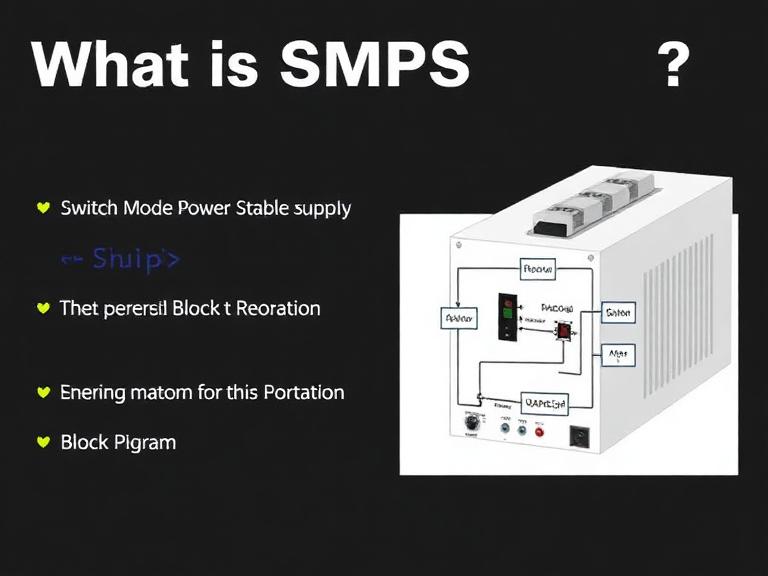
To deliver a clear smps switch mode power supply explain, we must first contrast it with older technologies. Traditional linear power supplies manage voltage regulation by dissipating excess power as heat, resulting in massive inefficiencies, bulky transformers, and heavy heat sinks. A Switch Mode Power Supply (SMPS) circumvents these limitations by utilizing high-frequency switching technology. By rapidly turning power electronic components on and off, an SMPS controls the flow of electrical energy with minimal waste, achieving efficiencies frequently exceeding 90 percent. We recommend SMPS technology for any application demanding a compact footprint, lightweight design, and superior thermal management.
Содержание
- 1. What is an SMPS?
- 2. SMPS Block Diagram: Step-by-Step Analysis
- 3. Stage 1: Input Rectification and Filtering
- 4. Stage 2: High-Frequency Inverter and Switching
- 5. Stage 3: High-Frequency Power Transformer
- 6. Stage 4: Output Rectification and Filtering
- 7. Stage 5: Feedback and Control Circuit
- 8. Common SMPS Topologies
- 9. Industrial Applications and OHRIJA Solutions
- 10. Summary Table: SMPS Topologies
- 11. Часто задаваемые вопросы (FAQ)
- 12. References
1. What is an SMPS?
To begin our smps switch mode power supply explain, we define the SMPS as an electronic power supply that incorporates a switching regulator to convert electrical power efficiently. Unlike a linear regulator that steps down voltage by turning excess voltage into heat, an SMPS continually switches transistors (such as MOSFETs or IGBTs) fully on and fully off. Because the transistor is either conducting with near-zero voltage drop or blocking with near-zero current, the power dissipated is minimized.
From our experience designing robust power solutions, this high-frequency operation is the secret to the SMPS’s success. Operating at frequencies ranging from 20 kHz to over 1 MHz allows the internal magnetic components, such as transformers and inductors, to be significantly smaller and lighter than those operating at the standard 50 Hz or 60 Hz line frequencies. A thorough smps switch mode power supply explain must highlight this relationship between frequency and component size, which is why your laptop charger fits in your bag, whereas an equivalent linear supply would be the size of a brick.
2. SMPS Block Diagram: Step-by-Step Analysis
To properly execute an smps switch mode power supply explain, visualizing the internal architecture is essential. While specific designs vary based on the topology used, the fundamental operation of an offline AC-to-DC SMPS can be broken down into five distinct functional blocks. Below is a conceptual breakdown of the SMPS block diagram:
AC Mains Input ➔ [Input Rectifier & Filter] ➔ Unregulated DC
Unregulated DC ➔ [High-Frequency Switching Network] ➔ High-Frequency Pulsed AC
High-Frequency Pulsed AC ➔ [High-Frequency Transformer] ➔ Stepped-Down High-Frequency AC
Stepped-Down High-Frequency AC ➔ [Output Rectifier & Filter] ➔ Regulated DC Output
[Regulated DC Output] ➔ [Feedback & Control Circuit (PWM)] ➔ Controls [High-Frequency Switching Network]
Let us delve deeper into each of these blocks to provide a complete smps switch mode power supply explain.
3. Stage 1: Input Rectification and Filtering
The journey of electrical conversion begins at the AC mains. The input rectification stage receives the alternating current (typically 110V or 220V) and converts it into direct current. This is typically achieved using a full-wave bridge rectifier consisting of four diodes. However, the output from the rectifier is not a smooth DC; it is a pulsating DC voltage.
To resolve this, a bulk capacitor filter is placed across the output of the rectifier. This large electrolytic capacitor smooths out the ripples, providing a relatively stable, high-voltage unregulated DC supply. Additionally, this stage incorporates an Electromagnetic Interference (EMI) filter. From our experience, preventing high-frequency noise generated by the SMPS from feeding back into the AC power grid is crucial for regulatory compliance. We recommend utilizing high-quality X and Y capacitors alongside common-mode chokes to ensure pristine electromagnetic compatibility.
4. Stage 2: High-Frequency Inverter and Switching
This is the core of any smps switch mode power supply explain. The unregulated, high-voltage DC is fed into the inverter stage, which consists of power semiconductor switches, most commonly Metal-Oxide-Semiconductor Field-Effect Transistors (MOSFETs). These switches are driven by a control circuit that turns them on and off at incredibly high speeds (tens to hundreds of kilohertz).
This rapid switching action “chops” the DC voltage, converting it back into a high-frequency alternating current (or a pulsed square wave). Why convert DC back to AC? Because transformers only operate with alternating current, and as previously established, high-frequency AC allows us to use a drastically smaller transformer. The duty cycle (the ratio of the time the switch is ON to the total time of one cycle) is precisely controlled to dictate how much energy is transferred to the next stage.
5. Stage 3: High-Frequency Power Transformer
The high-frequency pulsed AC is then applied to the primary winding of a high-frequency ferrite core transformer. This transformer serves two critical roles in our smps switch mode power supply explain:
- Voltage Scaling: It steps the voltage up or down to the desired output level. For most consumer and industrial electronics, this is a step-down process (e.g., converting primary voltage down to 24V or 12V).
- Galvanic Isolation: It electrically isolates the hazardous high-voltage input side from the low-voltage output side, ensuring user safety.
Because the transformer operates at high frequencies, the magnetic core is made of ferrite rather than the laminated iron cores used in 50/60 Hz transformers. This drastically reduces eddy current losses and physical weight.
6. Stage 4: Output Rectification and Filtering
The secondary winding of the transformer outputs a stepped-down, high-frequency AC voltage. Since the end device requires a stable DC voltage, this high-frequency AC must be rectified and filtered again. Standard silicon diodes are too slow for these high frequencies, so Schottky diodes or ultrafast recovery diodes are employed.
Once rectified, the voltage is still pulsing. An LC filter network (consisting of an inductor and a capacitor) is used to smooth the pulses into a clean, stable DC output. The inductor resists changes in current, while the capacitor resists changes in voltage, together eliminating the high-frequency switching ripple. In our high-power units, such as the Источник питания 12 В 50 А 600 Вт, the output filtering stage is meticulously engineered to provide clean, uninterrupted power even under maximum load conditions.
7. Stage 5: Feedback and Control Circuit
An accurate smps switch mode power supply explain must emphasize the feedback loop. To maintain a constant output voltage regardless of changes in the input line voltage or the load current, the SMPS uses a closed-loop control system. A sensing circuit continuously monitors the output voltage and compares it to an internal reference voltage.
If the output voltage drops (due to a heavy load), the error amplifier signals the Pulse Width Modulation (PWM) controller. The PWM controller responds by increasing the duty cycle of the MOSFETs, keeping them turned on slightly longer each cycle to push more energy through the transformer. Conversely, if the output voltage rises, the duty cycle is decreased. To maintain galvanic isolation, this feedback signal is typically transmitted from the secondary side to the primary side using an optocoupler. This constant, real-time adjustment ensures the precise voltage regulation that defines a high-quality SMPS.
8. Common SMPS Topologies
Depending on the power requirements and specific application, different circuit arrangements, or “topologies,” are used. We recommend selecting the topology based on wattage, cost, and efficiency needs:
- Flyback Converter: Ideal for low power applications (up to 150W). It provides isolation and uses a coupled inductor rather than a true transformer to store and transfer energy.
- Forward Converter: Used for medium power ranges (100W to 300W). It transfers energy directly to the secondary during the ON state of the switch, offering better efficiency than a flyback.
- Half-Bridge and Full-Bridge: These topologies are utilized for high-power applications (500W to several kilowatts). They use multiple switching transistors to handle massive amounts of power efficiently.
9. Industrial Applications and OHRIJA Solutions

At OHRIJA, our expertise as an производитель регулируемых источников питания relies entirely on mastering the principles outlined in this smps switch mode power supply explain. Switch Mode Power Supplies are the foundation of modern battery charging technology. Lithium batteries, in particular, require precise Constant Current and Constant Voltage (CC/CV) charging profiles, which can only be accurately delivered by an advanced SMPS with an intelligent feedback loop.
For industrial and mobility applications, we have developed robust solutions such as the 24V lithium battery charger 10A, designed for high-efficiency energy transfer with minimal thermal buildup. For heavy-duty electric mobility, our 84V electric scooter charger utilizes advanced high-frequency switching to deliver rapid charging times while protecting battery longevity. Furthermore, our Источник питания переменного и постоянного тока 24V 15A serves as a testament to the reliability of full-bridge SMPS topologies in continuous-duty industrial environments. From our experience, investing in a high-quality SMPS design dramatically reduces equipment failure rates and extends the lifecycle of connected devices.
10. Summary Table: SMPS Topologies
| Topology Type | Typical Power Range | Isolation | Первичное применение |
|---|---|---|---|
| Понижающий преобразователь | 0 – 1000W+ | Non-Isolated | DC-DC step-down, point-of-load regulators |
| Flyback Converter | 0 – 150W | Isolated | Laptop adapters, small battery chargers |
| Forward Converter | 100W – 300W | Isolated | Desktop PC power supplies, industrial controls |
| Half-Bridge | 300W – 1000W | Isolated | High-end computer PSUs, medium chargers |
| Full-Bridge | 1000W – 5000W+ | Isolated | Telecom power, EV chargers, heavy industrial |
11. Часто задаваемые вопросы (FAQ)
12. References
To further your understanding of power electronics, power conversion topologies, and regulatory standards, we recommend reviewing the following authoritative resources:
- IEEE Xplore Digital Library – For peer-reviewed academic papers on advanced Switch Mode Power Supply topologies and high-frequency power electronics.
- National Institute of Standards and Technology (NIST) – For guidelines on electrical measurements and power efficiency standards.
- Министерство энергетики США (DOE) – For information on energy efficiency regulations and standards applicable to external power supplies and battery chargers.
 English
  Français
  Deutsch
  Italiano
  Nederlands
  Español
  Português do Brasil
  Türkçe
  Русский