

The operational efficiency of personal and commercial fleet mobility relies heavily on the health of its underlying energy storage and replenishment systems. Whether managing an upscale country club fleet, an industrial material handling crew, or a private neighborhood vehicle, encountering a failure in the charging loop can paralyze daily workflows. A common issue that directly cuts productivity is when electrical anomalies or physical component failures cause a golf cart charger to not charge the battery array. Identifying the root cause requires moving past superficial indicators to analyze circuit dynamics, voltage thresholds, and signal communication lines.
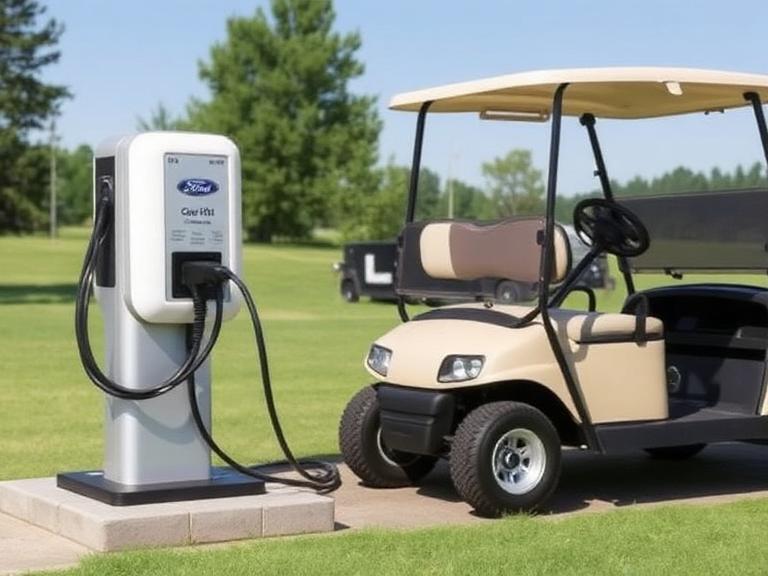
A OHRIJA, a brand belonging to Dongguan Hengruihong Technology Co., Ltd., we operate as a high-tech global enterprise integrating advanced research and development, state-of-the-art production, and international sales. Established in 2020 in Dongguan, Guangdong Province, China, our manufacturing facilities specialize in engineering high-performance lithium battery chargers, lithium iron phosphate battery chargers, lead-acid battery chargers, golf cart chargers, power adapters, and custom switching power supplies. From our experience, many fleet technicians replace expensive charging hardware prematurely when the actual vulnerability lies in a simple blown fuse or a deeply discharged pack that sits below the charger’s automated recognition threshold. This technical manual evaluates the five primary causes that trigger a golf cart charger to not charge, providing actionable troubleshooting steps to safely restore your vehicle’s energy loop.
Indice
- 1. Diagnostic Summary: Troubleshooting a Golf Cart Charger to Not Charge
- 2. Electrochemical Principles: Voltage Activation and Safety Sensing Loops
- 3. Deep-Dive: 5 Core Causes of Charging System Failures
- 4. Hardware Synchronization: Troubleshooting Thermal and Voltage Overloads
- 5. Domande frequenti (FAQ)
- 6. Industrial Electrical and Battery Standardization References
1. Diagnostic Summary: Troubleshooting a Golf Cart Charger to Not Charge
Before testing individual micro-switches or opening up solid-state transformer casings, service teams must cross-examine systemic symptoms. The table below outlines how specific failures cause a golf cart charger to not charge the connected battery bank.
| Root Failure Vector | Observed System Symptom | Electrical Core Mechanism | Primary Correction Protocol |
|---|---|---|---|
| 1. Total Voltage Depletion Below Threshold | Charger stays completely silent; no relay click heard | Battery pack voltage drops below the minimal sensing limit | Boost individual batteries manually with a low-voltage bench charger |
| 2. Faulty Onboard Computer (OBC) Signal | Charger clicks on briefly, then shuts off with an error light | The lockout signal line fails to communicate pack state | Execute an OBC manual bypass test or initiate a full software reset |
| 3. Blown Receptacle Fuse or Blown DC Fuse | LED indicators light up normally, but zero current transfers | Open-circuit defect halts the high-amperage path | Replace the inline fuse or the clear-window fuse block immediately |
| 4. Corroded Terminal Connections | Charger box hums loudly, but the pack percentage remains static | High resistance drops voltage, generating heavy localized heat | Clean connections with a neutralizing soda mix; tighten hardware |
| 5. AC Source Breaker Tripping | Charger displays zero power lights when connected to the wall | High initial current draw trips weak building breakers | Move the power cord to a dedicated 15A/20A industrial circuit line |
2. Electrochemical Principles: Voltage Activation and Safety Sensing Loops
To successfully solve issues where a golf cart charger to not charge situation occurs, you must understand the safety communication loops built into modern industrial power supplies. A smart battery charger does not simply push raw electrical current into a dead outlet the moment it is plugged into the wall. Doing so with reversed polarity or a shorted cell circuit could cause an immediate explosion or severe melting of the copper wire harnesses.
From our experience, premium charging units rely on an active voltage sensing loop. The control board must detect a baseline voltage feedback signal from the battery pack—typically a minimum of 20V to 30V on a standard 48V setup—before it triggers its internal magnetic relays to start the high-amperage current transfer. If a vehicle is left sitting in storage for several months with a slow electronic drain active, the pack voltage can drop far below this minimal sensing limit. When this happens, the safety system fails to recognize that a vehicle is connected, causing the golf cart charger to not charge the vehicle while staying completely silent.
From Our Experience: The Mismatched Charger Hazard
We recommend verifying that your charging equipment profile matches your specific battery chemistry exactly. Attempting to use an old-style lead-acid charger on a modern lithium iron phosphate (LiFePO4) conversion pack is a common mistake that will trigger early cutoffs or cause a golf cart charger to not charge properly. Lithium cells require a highly precise Constant Current / Constant Voltage (CC/CV) algorithm paired with individual cell balancing signals, whereas lead-acid profiles rely on heavy bulk-charging voltages followed by a long, slow finish phase that can permanently damage a lithium pack’s internal battery management system (BMS).
3. Deep-Dive: 5 Core Causes of Charging System Failures
1. Extreme Total Battery Voltage Depletion
As noted previously, the primary cause behind a silent, non-responsive charging setup is extreme total pack voltage depletion. When a lead-acid or lithium pack drops below its absolute low-voltage cutoff limit, the internal control circuits inside the charger remain un-energized. To verify this condition, connect a digital multimeter across your main positive and negative battery terminals. If your 36V or 48V array reads significantly lower than its nominal baseline, the safety circuits will block operation, causing the golf cart charger to not charge until you manually boost the pack back into its safe activation zone.
2. Onboard Computer (OBC) Signal Lockout Malfunctions
Many classic golf cart models feature an integrated Onboard Computer (OBC) that tracks energy usage, calculates state-of-charge data, and sends a specific low-voltage lockout signal to regulate the external charger. If the OBC suffers a software lockup or an internal circuit failure, it can freeze the system into a permanent lock-out mode. This communication breakdown tells the charger that the vehicle is either fully charged or currently in drive mode, causing the golf cart charger to not charge even when the batteries are completely drained.
3. Blown Inline Receptacle or Internal DC Fuse Blocks
The high-current path between your charging plug and your battery terminals is protected by high-amperage inline fuses designed to blow instantly if a short circuit or reverse-polarity surge occurs. If a user accidentally bridges a metal wrench across the battery terminals or plugs into a shorted receptacle, these safety fuses blow to protect the main components. A blown inline fuse breaks the electrical path completely, which stops current flow and immediately causes a golf cart charger to not charge the pack.
4. Heavy Terminal Corrosion and High-Resistance Connections
Golf cart batteries operate in harsh, highly corrosive environments, facing constant chemical off-gassing and intense vibration during daily operation. Over time, a thick layer of white lead sulfate or green copper oxidation can form across the terminal studs, lugs, and receptacle prongs. This oxidation layer acts as an electrical insulator, creating high resistance along the circuit. This resistance drops the voltage significantly before it can reach the cells, confusing the charger’s voltage sensors and causing the golf cart charger to not charge the array efficiently.
5. AC Input Source Failure and Circuit Overloading
Sometimes the issue doesn’t lie within the vehicle or the charger box itself, but within the building’s AC power source. High-power industrial chargers pull a substantial electrical load from the wall outlet during their initial bulk-charging phase. If the charger is plugged into a shared garage outlet running alongside heavy power tools, air compressors, or refrigerators, the initial current spike can trip the building’s circuit breaker or blow the outlet’s GFC safety switch, instantly cutting off power to the charger.
4. Hardware Synchronization: Troubleshooting Thermal and Voltage Overloads
-
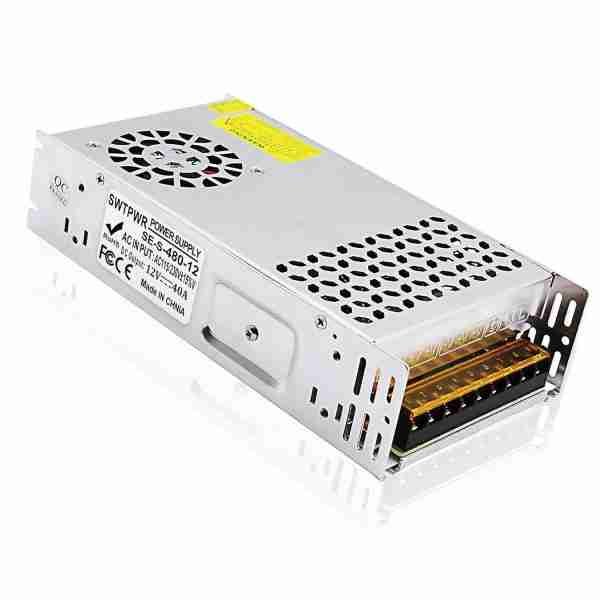
Alimentatore 12V 12V 40A 480W 50A 600W Convertitore CA/CC Trasformatore da 110V/120V a 12V Driver LED Ventola di raffreddamento intelligente Progettato per strisce LED CCTV e dispositivi per auto
Fascia di prezzo: da 13.90$ a 14.90$ -

Alimentatore 12V Convertitore da CA a CC 12V 50A 600W Trasformatore da 110V/120V a 12V Driver LED Ventola di raffreddamento intelligente Progettato per strisce LED CCTV e dispositivi per auto (DC12V, 12V-50A-600W)
Fascia di prezzo: da 23.90$ a 29.90$ -
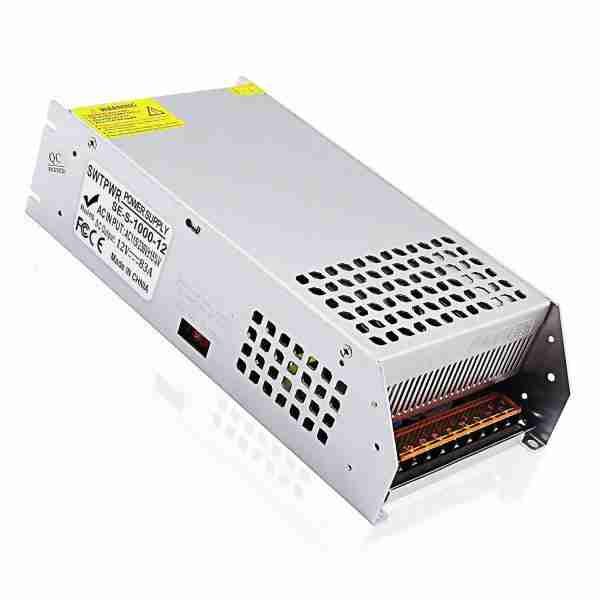
Alimentatore 12V Convertitore da CA a CC 12V 83A 1000W Trasformatore da 110V/120V a 12V Driver LED Ventola di raffreddamento intelligente Progettato per strisce LED CCTV e dispositivi per auto
Fascia di prezzo: da 29.90$ a 54.90$ -

Alimentatore 24 V Convertitore da CA a CC 24 V 15 A 360 W Trasformatore da 110 V/120 V a 24 V Driver LED Ventola di raffreddamento intelligente Progettato per strisce LED, telecamere a circuito chiuso e dispositivi per auto (CC 24 V, 24 V-15 A-360 W)
Fascia di prezzo: da 23.90$ a 29.90$
Restoring a failed charging loop requires a methodical troubleshooting approach, isolating individual electrical components to identify the exact point of resistance or failure.
To safely isolate common electrical issues before checking heavy vehicle wiring, technicians can follow standard testing protocols. If you are diagnosing a general household setup or light automotive converter, reviewing our guide on Come risolvere i problemi di un caricabatterie a 12 V outlines essential meter checks and circuit testing workflows. For fleet operators dealing with units that run hot during extended operations, consulting our materials breakdown on perché il mio caricabatterie si surriscalda? helps distinguish between normal thermal dissipation and dangerous overheating caused by internal component wear.
| Battery Chemistry Array | Nominal Operational Voltage | Safe Charging Algorithm Requirement | OHRIJA Engineering Resource Link |
|---|---|---|---|
| Multi-Cell Lithium Ion Matrix | 36V to 48V Nominal Base | Precise Constant Current / Constant Voltage | 36V Voltage Balance Manual |
| Fosfato di litio e ferro (LiFePO4) | Custom Fleet Volts (36V/48V) | High-precision BMS cell tracking interface | LiFePO4 Charger Compatibility Guide |
| Lightweight eBike Micro-Packs | 36V to 52V High-Density | Thermal protection cutoffs with auto-shutoff | eBike Safe Charging Overview |
Mastering Multi-Pack Voltage Conversions Safely
When upgrading light industrial tools or customizing personal electric vehicles, maintaining correct voltage matching across your chargers is critical for preventing fire hazards. For technicians looking to balance multi-stage batteries using mismatched equipment, exploring our analytical manual on Posso caricare una batteria da 36 V con un caricatore da 12 V? systems explains the physics of cell balancing and why voltage matching is vital. If your facility is upgrading old lead-acid vehicles to high-performance lithium setups, checking our compatibility report on il caricabatterie al litio può caricare la batteria LiFePO4 lines ensures your new hardware manages cell cutoffs safely. Finally, for teams managing smaller electric mobility fleets, our specialized safety manual tracking come caricare la batteria dell'eBike in modo sicuro details structural safeguards and thermal monitoring tips to keep your facility safe and highly efficient.
5. Domande frequenti (FAQ)
How can I bypass a smart charger’s safety lock to wake up a completely dead battery pack?
To wake up a deeply discharged battery pack that sits below the charger’s recognition limit, you must manually boost the total voltage. For lead-acid setups, you can connect a standard 12V car charger individually to each 12V or 8V battery in the loop for 20 to 30 minutes. This raises the overall pack voltage back into a safe zone, allowing the main golf cart charger to recognize the vehicle and resume normal operation.
What is the purpose of performing a manual reset on an Onboard Computer (OBC)?
An OBC reset clears out frozen software loops, recalibrates your state-of-charge tracking data, and resets internal memory errors that can mistakenly trigger a permanent charger lockout. Performing a full reset clears out these temporary errors, restoring proper communication between the vehicle and the external charger to fix unexpected charging failures.
Why does a failing golf cart charger click repeatedly without staying on?
Repeated clicking is typically caused by a rapid voltage drop that occurs the moment the charger engages its internal high-amperage relays. This sudden drop is often triggered by an internal short circuit in a dead battery cell, heavy corrosion along your main wire connections, or a worn-out relay switch inside the charger box itself.
Can I use a standard lead-acid battery charger on a new lithium conversion pack?
No, you should never use a standard lead-acid charger on a lithium pack. Lead-acid chargers utilize specific multi-stage algorithms with long equalization phases that push voltages too high for lithium cells, which can damage the pack or trigger early shutdowns by the internal battery management system (BMS). Lithium packs require dedicated CC/CV chargers that match their chemistry exactly.
What regular cleaning step is most critical for protecting golf cart charging receptacles?
The most critical maintenance step is keeping the receptacle contact prongs clean and dry. Use a fine wire brush or electronic contact cleaner to clear away white oxidation buildup, and apply a light coat of dielectric grease inside the plug ports. This grease seals out moisture, lowers resistance, and prevents heat damage during long charging cycles.
6. Industrial Electrical and Battery Standardization References
For official industrial battery charging safety directives, electric vehicle infrastructure codes, and international testing protocols, consult these authoritative organizations:
- Underwriters Laboratories (UL). UL 1564: Standard for Safety and Performance Compliance of Industrial Battery Chargers. Northbrook, IL.
- Society of Automotive Engineers (SAE). SAE J2293: Energy Transfer System Standards and Interoperability Testing for Electric Vehicles. Warrendale, PA.
- International Electrotechnical Commission (IEC). IEC 62576: Electric Double-Layer Capacitors and Active Safety Control Loops for Hybrid Electric Vehicles. Geneva, Switzerland.
 English
  Français
  Deutsch
  Italiano
  Nederlands
  Español
  Português do Brasil
  Türkçe
  Русский